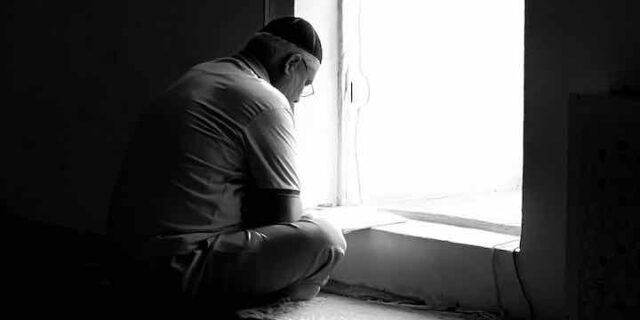
“Prayer may be best thing we can do for our brains.”
This surprising comment comes not from a Christian preacher, but from Neil K Shah, a medical researcher into caregiving & dementia.
Let’s look at how he came to this conclusion.
Exercise good, sedentary bad?
It is generally well known that exercise is beneficial for health, especially with older people. Regular exercise can improve heart health, maintain bone strength and help control weight. Perhaps less well known is that exercise benefits our brain and mental health by reducing anxiety, improving cognition and improving sleep.
Sedentary activities are more problematic. Sitting is not going to help our physical health much, but what about our mental health? It turns out it depends a lot on what we do while we’re sitting.
Scientific studies
A number of studies throw light on this question.
What we do while we sit
Maddison Mellow and her team studied how older people spent their day and compared this to their physical and mental health. They found that cardiometabolic (physical) health was improved by almost any exercise. But different sedentary activities had different effects on brain health.
“Quiet Time”, which may include reading, listening to music or some religious activities, or “Social”, which may include playing a musical instrument, sitting and talking with others, or crafts, both predicted beneficial cognitive outcomes – better memory & sharper thinking. But spending more time TV watching or playing video games was detrimental.
Neil Shah and press reports interpreted this conclusion as supporting prayer (among other things) as a useful activity for brain health.
Brain scans
Andrew Newberg scanned people’s brains while they were meditating or praying. He found changes in brain activity that suggested that people who frequently practice meditation experience lower blood pressure, lower heart rates, decreased anxiety, and decreased depression. Prayer brings peace, timelessness and sense of connection with something larger.
Relaxation
A 1975 study by Herbert Benson found that (i) a passive attitude and (ii) a simple word, phrase, prayer or activity to repeat to keep the mind from wandering (as occurs in meditation and prayer), helped people to relax. Being relaxed led to improved physical and mental health by reducing stress and blood pressure.
Loneliness
Loneliness has reached “epidemic” proportions in same western countries, and can lead to dementia and cognitive impairment. Neil Shah says prayer creates “a felt sense of connection” that can help.
Prayer and religious belief & practice
This book by medical researcher Harold Koenig summarised the benefits of religious belief and participation in religious activities, including prayer.
- People who regularly attend church, pray individually and/or have a strong religious faith have many improved physical health outcomes, including lower blood pressure, lower levels of hospitalisation, stronger immune systems, less likely to suffer from cardiovascular disease and cancer in later life, and living longer.
- Likewise they have better mental health outcomes, including less depression, less addictions and greater life satisfaction.
- Repeated prayer can change unhealthy and addictive behaviours. One drug addict repeated a simple prayer, “Lord help me to hate this drug as much as I love it.” a hundred times daily found this took away his desire for heroin, something psychotherapy and drug treatment hadn’t achieved. Prayer is also able to reduce craving for food.
- Sincere devotional practices including daily recitation of scripture led to reduced stress and anguish and increased tranquility. Walking and praying together was found to have benefits.
In another study, women who regularly attended religious services had a 30% lower mortality rate.
Help for the ageing
Private prayer has been shown to be helpful in slowing the progress of dementia and improving quality of life for elderly people. For ageing people, prayer calms, reduces sleep disorders & distressing behaviours and leads to better thinking.
Why does it work?
- Praying requires our brains to give attention, use language, experience emotion and use our memory. These are all actions that neurosciuentists have found are a “protective activity”.
- Focused prayer trains the mind and can help fight destructive thoughts.
- Praying and attending religious services provide things which protect an ageing brain – belonging, purpose, ritual, singing, a reason to get out and small human interactions.
- Prayer creates a felt sense of connection – with God or the divine – and so helps an older person not to feel lonely or worthless, which gives them a sense of peace and helps them stay mentally healthy and so live longer.
Helping ourselves
Neil Shah recommends these actions in response to this information.
- Begin or strengthen a practice of prayer or meditation.
- Aim for 15 minutes daily.
- Focus our attention, and be disciplined to re-focus if we drift.
- Prioritise the communal aspect, by attending a service in person or online, or even just making a phone call.
If supporting someone living with dementia, use their oldest and most familiar prayers as a bridge to reach them.
What these studies do and don’t show
These studies tell us little about whether God exists and is listening to our prayers. These studies are primarily about the psychological effect on the person praying or meditating. But if they are praying for themselves, the beneficial effects reported may indeed be merely psychological, but equally they may be because God answered those prayers – or both.
There are studies on the effects of prayer on the people being prayed for. Some studies, including a large famous study, indicate no beneficial effect. A slightly larger number of studies indicate a beneficial effect on those being prayed for. Some individual cases with medical evidence suggest sometimes miraculous healings take place. But this is not what I have been discussing here.
But these studies certainly show that religious belief and practice isn’t as harmful as some critics have claimed. It simply isn’t true that “religion poisons everything”. Though it does sometimes have bad effects, the problem is generally people using and abusing religion in ways that harm others. Practiced normally, religion helps people be physically and mentally healthy.
Check it out
Watch Neil Shah’s 20 minute video.
Photo: Faysal Khan.



I have definitely felt positive mental impacts from my little agnostic prayer every night before bed. I have no idea if anything divine out there or everywhere can hear me, but it terms of mental health it has certainly been beneficial and meaningful to me as a practice.
Aaron.
Thanks, that’s great and confirmation of what the psychologists say. Maybe one day you’ll get an answer back!