The Bible is a holy book for more than a quarter of the world’s people, but it has its share of critics too.
So it is easy to find people with differing strong opinions on its value. But how can someone read it from a neutral starting point?
On this page we examine what we find if we read the Bible with an open mind, and what experts in history, archaeology, ancient literature and theology can help us understand better.
This information may help us see whether the Bible is a book written or inspired by God, a human book of historical interest but little more, or something else. And hopefully whether and how we should read it.
After reviewing what we find when we read the Bible, I conclude that not all stories are fully historical, nor intended to be – the authors had other purposes. This is especially so for the early half of the Old Testament.
Sometimes conflicting accounts or teachings can be found. These may be intended for different situations and purposes, but it tends to lead to the conclusion that the Bible doesn’t give a single clear message that can be applied at all times and places.
While many Christians regard it as “God’s Word”, meaning that it was effectively written by God and is without errors, we find that the Bible doesn’t actually make that claim itself. It seems better to see it as an account of how people encountered God, through which God teaches what he wants us to know.
The gospels in the New Testament are written as historical biographies of Jesus, telling the truth about him as seen by his followers. They therefore can be generally trusted, but are not without some information that is to be regarded as non-literal. Quite enough is historical that we can have confidence in the picture they give us of Jesus’ life, death and teaching.
I finish with some principles for thoughtful Bible reading.
Background
Pick up a Bible and you quickly find it isn’t a book so much as a library of more than 60 separate texts written over many centuries by many different authors.
The first three quarters (the Old Testament) is more or less the Jewish scriptures as they were at the time of Jesus, with a few changes. The last quarter (the New Testament) is made up of 27 books written by the first Christians in the century after Jesus died (about 30 CE).
None of the original documents survive. What we have is copies of copies of copies. This of course makes it likely that copying errors have occurred along the way. But fortunately, many copies exist of most books, especially in the New Testament, so we can be fairly confident that what we read is very close to what was originally written – although of course it has been translated out of the original Hebrew or Aramaic (Old Testament) and Greek (New Testament).
What may not be so obvious is that the contents of both the Jewish scriptures and the Christian New Testament were only finalised after several centuries of discussion and disagreement, though there was unanimity about the inclusion of most books. But even now, the Orthodox and Catholic churches include a number of books written in the last few centuries BCE which the Protestant churches don’t include.
By the way, it isn’t true, as sometimes claimed on the internet, that Roman Emperor Constantine decided what books would be included in the New Testament. There was general agreement on the contents of the New Testament before Constantine.
A range of views
Let’s start with the range of views that an open-minded reader may want to consider. I think broadly there are four main views of how we should see the Bible.
1. Word of God. Many Christians believe the Bible contains exactly the words God wanted to be there. It tells us everything we need to know about God and his expectations of us, and is therefore trustworthy and accurate in everything it says. We can read it and learn what to believe and how to live.
2. The Scriptures. Many other Christians accept the Bible as the formative writings about their faith. It is a human book subject to human frailties, but is nevertheless inspired by God and a vehicle for his revelation to us. We need to read it with some care and prayer for God’s interpretation.
3. Historical texts.Historians, archaeologists and other trained experts assess the Bible the same as they’d assess other ancient texts, and come to a broad consensus on the historical accuracy, or otherwise, of different parts of the text. Their expertise doesn’t extend to making judgments on the Bible’s ethical and religious teachings. But people the world over have found value in the 23rd Psalm, the Sermon on the Mount and the parable of the Good Samaritan, so it still has relevance today.
4. Anachronistic texts. Some critics dismiss the Bible as full of errors and outdated worldviews, fanciful writings by imaginative and superstitious ancient peoples with no scientific understanding. It may be of some scholarly interest but is irrelevant for most of us today.
There are of course shades within and between these views. My aim on this page is to examine what the Bible says about itself, and what external facts are relevant, so we may all be better able to choose between these viewpoints.
Where to start?
I’ve heard of people who try to read the Bible like any other book – start at the beginning and read to the end. But that doesn’t seem to me to be the best way.
It’s hard. The Bible starts off with some stories, but soon readers find themselves bogged down in genealogies and a mass of arcane laws. It is easy to give up at this point.
The Bible isn’t necessarily in chronologicval order and wasn’t written as one book, so it isn’t necessary to start at the beginning and try to keep reading.
The New Testament outlines the life of Jesus and the establishment of the Christian church in the first century. It is the most important part of the Bible for Christians. The Old Testament is sort of like a prequel, and is best read (by those seeking to understand Christianity) after reading the New Testament.
So let’s look at the life of Jesus and the New Testament first.
The New Testament
The four gospels
When I read the gospels, I get the impression that these stories are based on what people actually saw and reported. The four gospels mostly agree on the main details of the story of Jesus, but there is variability in some aspects.
Each gospel has its own character. Mark and Luke seem to be more straightforward reporting, while Matthew occasionally uses fanciful narrative to illustrate a point and John is as much interpretation aimed at later generations of Jesus-followers as it is reporting.
Historians and theologians tend to confirm these first impressions. The gospels belong to the genre of historical biography, in which selected details of a person’s life are presented accurately, to show the person’s character and abilities. However there is flexibility in how some of the details are reported. And it is possible that the author (or editor) invents or “talks up” some things at the start of the story to show the importance of the character they are writing about.
Who wrote them?
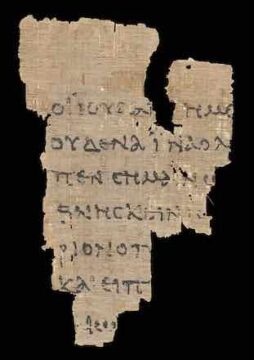
A small fragment of the gospel of John, perhaps the earliest New Testament document that has been discovered. It is generally dated about mid 2nd century and is thus a copy very close to the original.
The four gospels are anonymous and the titled authors are based on early traditions – there is debate about whether they are the actual authors. But since it seemes likely that the gospel stories were passed down orally (mostly) from eyewitnesses and assembled by later editors, a number of people may have been involved in the final text, and the question of authorship is perhaps academic.
There is general consensus that the four gospels were written in the second half of the first century, probably when the generation of the first eyewitnesses was dying out. Other so-called gospels were generally written in later centuries and historicans say they give us little authentic information about Jesus.
Historians question some of the content of the gospels – some individual incidents and the birth stories – but generally agree on the main aspects of Jesus’ life – he was a travelling teacher who was known as a healer, his main message was the dawning rule of God on earth through him, he characteristically taught in parables (short memorable stories which provoked hearers to consider their meaning), he gathered disciples, he aroused the ire of the Jewish religious authorities and was executed by the Roman authorities. A short time later his followers were proclaiming that he had been resurrected.
Historians can’t tell us whether he really did perform miracles, nor whether he really was resurrected. The historical evidence shows he was believed by his followers to have done those things, but it is an individual decision whether we accept that he actually did, or not.
The majority of historians, whatever their personal beliefs, come to these conclusions because we have multiple sources for information about Jesus, not just in the Bible but in secular writings also. It is highly unlikely, they say, that all these stories could have been invented in different places and yet substantially agree.
Jesus
For Christians, the main point in reading the Bible is to learn about Jesus. Historians have no doubt he was a historical character whose main teachings and life outline are preserved in the gospels. But was he the son of God (whatever exactly that means)? Or was he, as some say, an inspiring but failed prophet?
In the end, these are assessments we each have to make, based on familiarity with the gospels and whatever we can learn from the experts.
The rest of the New Testament
The rest of the New Testament consists of a score of letters, a brief description of how some of the leaders of the early Christian church responded, and the book of Revelation.
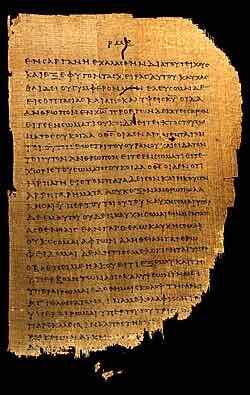
A folio from papyrus P46 containing 2 Corinthians. This papyrus contains sections of many of Paul’s letters, and is dated to about 200 CE.
About half the letters were written within a few decades of Jesus’ death and the others somewhat, perhaps much, later. They give a little more information about Jesus’ life, but mostly address ethical and belief issues facing the first Christians.
The historical book of the Acts of the Apostles is considered by most historicans to be reasonably reliable, and shows a little of how Christianity spread and evolved.
Revelation belongs to the genre of apocalyptic – a Jewish type of literature that focuses on prophetic revelations about the end of the world and significant future events, often featuring themes of divine judgment and cosmic upheaval. Many people have unfortunately not understood the genre and taken some of its symbols literally, leading to some weird and often dangerous conclusions.
The Old Testament
The Old Testament, and the Jewish Tanakh from which it is taken, are complex collections of texts with many different genres of literature. Christians divide it into 4 groups: Law, History, Writings (poetry, proverbs, etc) and Prophets. (The Jews only have 3 groups and include the historical books under either prophets or writings.)
A sensible reader will recognise different genres and interpret each one in an appropriate way.
Reliable history?
Simply reading the text suggests some of the narrative sections are like folk tales, some read like factual depictions of a rather brutal culture, and some are aspirational and forward-looking.
In the beginning
The early chapters of Genesis – the stories of creation, Adam & Eve, Noah’s flood & the Tower of Babel – appear to be legend or folk tale, and scholars generally agree. DNA and other scientific evidence indicates the slow evolution of life on earth rather than creation in 6 days, and it is scarcely believable that a flood covered the whole earth, or that representatives of all terrestrial species on earth could have fitted into Noah’s ark.
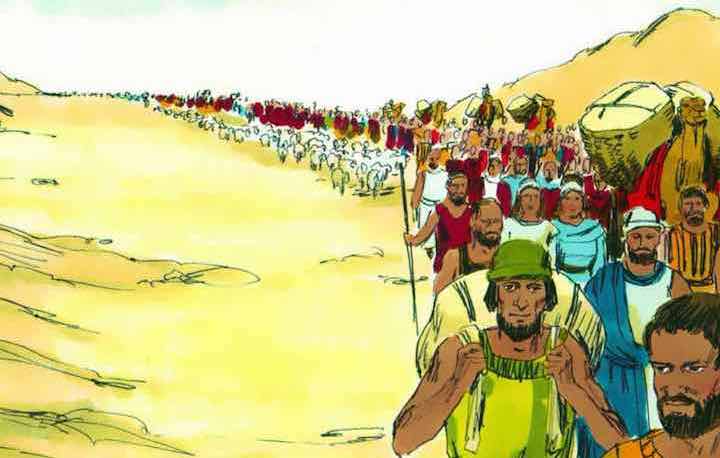
Later stories in the early part of the Bible tell of nomadic herdspeople (the “Patriarchs”) who we wouldn’t expect to leave much evidence behind them, and the famed Exodus under Moses of 2+ million Israelites from slavery in Egypt.
The stories of the Patriarchs reflect their time, customs and geography reasonably well, but there is no way to confirm or disprove them as history.
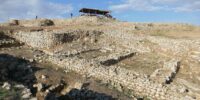
Remains of rock wall in ancient Jericho. It seems Jericho wasn’t destroyed by Joshua, but the Bible story records some historical event.
There are good historical and archaeological reasons to doubt the accuracy of the Exodus account and the supposed conquest of Canaan. The Biblical numbers are too large (there wouldn’t have been room for them all in Canaan) and the archaeology doesn’t show a disruptive conquest, though some parts of account appear to be historical.
But it seems likely that a smaller group did make the journey from Egypt to Canaan (modern day Israel & Palestine) and gradually assimilate and have an influence on Canaanite culture and religion, eventually leading to monotheism.
So it is difficult to believe that the Biblical accounts for this whole period (more or less the books from Genesis to Joshua) are accurate history, or even attempt to be.
Experts tend to call this section of the Bible “fictionalised history” – historical events selected, exaggerated and invented to tell a story, in this case justifying the Israelites’ claim to the land in Canaan as God’s chosen people.
In the time of written records
By about a millennium BCE, Israel had formed as a nation (or two nations – Israel and Judah) and we have access to written records about them, sometimes by their foes as well as themselves.
Historians say that most of the writings in the Old Testament were edited and modified over time, and probably only reached the form found in the Bible around five centuries before Jesus.
Internally, different books sometimes contain differing accounts of the same events in – e.g. the books of Chronicles compared with the books of Samuel and Kings. It seems that several different perspectives are contained within the Old Testament, and sometimes this changes their versions of events. But the names of kings and other details suggest the writers were attempting to record real events, even if they slant their accounts to suit their purposes.
Comparison with archaeology and external texts confirms the impression that we are dealing with accounts of real events, selected and interpreted to show how the writers saw the action of God in their world. This perspective seems to have led to mythical and fictionalised elements, aimed at making certain messages clear. Thus these texts aren’t history as we know it today, but contain factual distortions and inaccuracies, similar to what can be seen in the accounts from other nations, as well as reporting of actual events.
What is clear is that these were brutal times with some very strange practices. Women were often treated as property, human life was often cheap and the supernatural (in many forms) was real. Social and religious customs were sometimes quite strange (to us) and not always humane. Archaeology shows that the monotheism expressed in the Bible for much of this time was in the minority among the people of Israel and Judah.
The supernatural
The action of God, and occasionally other spiritual forces, is integral to the whole Old Testament.
This is common in many ancient writings, and not necessarily a reason to reject the entire text. Jewish and Christian believers may accept many of these events as historical, but some of the reported supernatural events strain credulity.
Teachings
Whether the Old Testament teaches truths about God is surely more important than historical accuracy. After all, truth can be embodied in history, allegory, narrative, poetry or legend. So what can we make of its ethical and religious etachings?
Overall, the Old Testament paints a picture of a God who loves his people passionately, unlike the gods of most other nations, who treated their worshipers more like servants. A God who evokes loving responses like we see in Psalm 23 (“The Lord is my shepherd”) A God who fights on behalf of his people, but expects high standards of ethics – for example, the prophets rail against Israel’s lack of justice for the poor.
But that’s only one side of the story.
Problematic
The Torah contains teachings on all aspects of life in ancient Israel – ethics, religious ritual, social behaviour, etc. Most seem appropriate, even sometimes advanced, for their time, but many are irrelevant or inappropriate for our time. Most people can agree with the sentiments of the Ten Commandments we all know, but other laws are more problematic, to say the least:
Leviticus 20 requires the death penalty for a child cursing their parents, for those committing adultery, incest or other non acceptable sexual behaviours, and for being a medium.
Women were sometimes treated as objects to be owned by men – see Exodus 22:6-17 and Deuteronomy 22:28-29 if you don’t mind some nasty detail.
There are strange (to us) rules about not weaving together wool & linen and not planting two kinds of seeds in a vineyard (Deuteronomy 22:9-11). And rules against eating shellfish, pig meat and some other animals (Leviticus 11).
So we can see that many of the Old Testament rules are rightly repugnent to us today, and many others aren’t followed by most Christians, mostly for good reason.
It gets worse. In the story of the Israelites entering and conquering Canaan, God is depicted as commanding wholesale genocide, sometimes requiring the Israelites to destroy every living thing in a city – not just combatants, but everyone (Deuteronomy 7:1-5, 9:5, 18:9-12, 20:16-18). The archaeology, and even the second half of the book of Joshua, show this didn’t actually happen, but the commands are there.
So it seems to me to be impossible to believe in the loving God that Jesus portrays (or even as is portrayed in some parts of the Old Testament) and believe he really did give these commands. And I’m certainly not the only reader to think that.
Inconsistency and development
There are places where earlier teachings are amended, developed or even contradicted by later teachings.
There are actually 3 versions of the Ten Commandments, the version we are familiar with in Exodus 20, a supposedly copy of the first one (which was destroyed when Moses threw them down), but is actually quite different in Exodus 34, and a later version in Deuteronomy 5 which is similar but not the same as the Exodus 20 version.
Exodus 20 & Deuteronomy 5 say God will punish 4 generations of descendants for their ancestors’ sin, but Ezekiel 18 says God won’t do that.
The Torah (mainly Leviticus) sets out very detailed rules for sacrifices, festivals and worship, but the prophets say these aren’t nearly as important as justice (e.g. Amos 5:21-24).
The compilers of the various books and the whole Tanakh would have been aware of these inconsistencies (and many others), but allowed them to remain. All this makes it difficult to believe that the Old Testament is God’s word without error.
Prophecy
Attentive readers will notice that some of the books are written by or about prophets, spokespeople for God. What should we make of their prophecy?
Firstly, we should note that the essence of Old Testament prophecy isn’t prediction of events, but a revealing of God’s mind. The prophets mostly critique Israel and Judah for their compromising worship of other gods, and for social injustice. We can probably agree with much of what they say, although God’s fierce anger may be hard to deal with.
But there is still prediction, mostly of punishment for Israel and Judah, but also punishment for surrounding nations, and occasionally foreseeing a time when God would put things right through his servant – e.g. Isaiah 9 and 53 (Christians believe Jesus fulfilled these prophecies).
I once read that the accurate fulfilment of all these prophecies was proof of their origin with God. But when we look at them, we find fulfilment is variable. In many cases the prophets got broad predictions right, but not all of the details.
In one famous case, Ezekiel predicted with some detail the total downfall of Tyre. Much of it did occur, but not all of it. But this fact wasn’t hidden – Ezekiel gives another prophecy which accepts the reality and makes further predictions. It seems that total accuracy of detail wasn’t so important, the main thing was the overall message.
But did God really make such judgmental, and sometimes violent predictions?
What to make of the Old Testament?
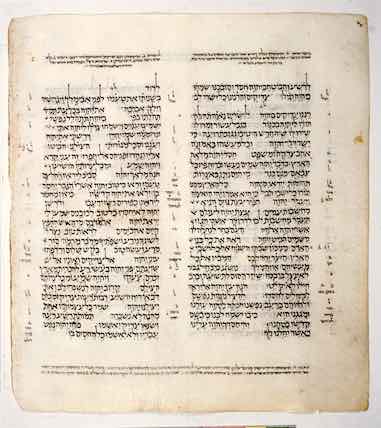
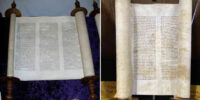
The Leningrad Codex, the oldest complete text of the Hebrew Bible, dated early 11th century CE. This section contains several Psalms.
The Old Testament is a very mixed bag. It gets some things right (mostly in the prophets) but they get some things badly wrong (especially early on). It falls well short of what we know in the New Testament, but always seems to be a step ahead of the pagan religions around about.
Both the history and the ethics make it impossible for me to believe that this is a sublime and without error expression of God’s character and his dealings with people. It looks more like the collected writings of passionate people who were gradually working out who God is.
Jesus accepted these scriptures and referenced them often in his teaching, so a Christian cannot easily dismiss them. But he often contested how they were being interpreted and sometimes updated them, speaking as if he had authority to do so.
CS Lewis, an ancient historian and possibly the premier English-speaking Christian author of the 20th century, said that the Old Testament starts with paganism and myth and slowly moves towards history and ethical truth.
That seems right to me.
It means we can learn from the Old Testament, but not everything we learn or see will conform to the later revelation in Jesus.
Reading the Old Testament
If all this is broadly true, we need to read the Old Testament with awareness of genre, culture and history. Reading the Bible instinctively is not reliable and risks imposing a foreign perspective on the text.
But there are principles by which we can better understand what we are reading. For example:
Words that are roughly comparable in two languages often carry different nuances. We need to know what words meant back then.
In a hearing-dominant culture, there are no books or authors as we know them – “book” is the last step in a process, not the first.
Reality is bigger than history. The authors believed God was behind all events, and so they were more interested in understanding God’s actions than in objectively reporting actual events.
Prophecy is not prediction.
It is possible to read the stories without this sort of more expert knowledge, but if we want a reliable understanding, we’ll need to use principles like these.
Relating the two Testaments
I have suggested that the New Testament is fairly reliable in what it tells us about Jesus, but the Old Testament cannot be taken as a correct revelation of God because the people were on a journey to what God wanted them to believe. But if this is true, two problems arise.
1. Did Jesus prove the Old Testament is reliable?
In several places, Jesus mentions Adam and Noah, characters in Old Testament stories that are (to say the least) problematic historically. Does this prove they existed?
I don’t think so. These were the Jews’ foundational stories and they would likely have been referenced in the same way whether they were historically true or not. Jesus seems to choose to communicate the essentials and not get into the weeds of challenging the historicity of these people.
The first century Jews had a fluid attitude to their scriptures. They were happy to allow different, and often fanciful, interpretations that changed the meaning of the original text. The Christian writers of the New Testament at least 3 times mentioned the names of characters of doubtful historicity and only found in texts that are not part of the Jewish or Christian scriptures.
Since the historical evidence for the existence of Adam and Noah is very poor or non-existent, it seems reasonable to believe Jesus speaking about them doesn’t prove anything.
2. Does the Old Testament prove the New is unreliable?
Some critics say that since the Old Trestament is unreliable historically, so the New must be unreliable also. This may be an argument against the whole Bible being without error, but it isn’t reasonable otherwise.
The Bible is composed of many books, many genres, written over almost a millennium for different purposes, and only assembled later. Each has to be judged on its merits. It is quite reasonable to think Job is a poem rather than history and also think Mark’s gospel is historical.
The New Testament is in essence the fulfilment of the Old. Jesus said (Luke 16:16) that theJewish religion was relevant up to his coming, but now the good news about him is pre-eminent. Other New Testament passages (Hebrews 8:13, Romans 7:6, 2 Corinthians 3:5) reinforce this idea that the Old Testament is no longer binding on Christians.
So the Old Testament is, for Christians, the “old covenant” or God’s dealing with the Jews. But the good news about Jesus is the new covenant, how God deals with us today.
So, which view of the Bible?
We started with 4 main views about the Bible. After briefly considering the evidence, which ones stand up?
Listening to the experts
I believe we need to start with the objective evidence. At the very least we can hold onto what the historians tell us (view #3). Of course there are wide ranges of conclusions on some aspects, but the broad picture is clear enough.
The Old Testament, especially the earliest sections, contains some stories and teachings that conflict with each other and with known archaeology. Later sections are broadly historical but written for other purposes. It shows development from a sometimes brutal tribal paganism to ethical monotheism (though still nationalistic).
The New Testament is broadly historical, though with plenty of anomalies and questions. Jesus was a historical person whose teachings and life are reasonably well known to us. His teachings have attracted and encouraged billions of people. He was, at least, an inspiring ethical teacher. Perhaps he was more.
The Bible stands as interesting and sometimes great literature. It can be read and simply understood, but requires expert background information to understand at a deeper level.
This seems to me to be the foundation on which to do our own reading and build our own view of the Bible. But what more can we say?
So it can’t be dismissed
So I find no reason to take a totally negative view of the Bible (view #4).
The Bible has historical value even if it isn’t totally historical as we understand it today. Its teachings generally seem to be well ahead and more ethical than those of the cultures around them. It contains some sublime passages. The Sermon on the Mount and some of Jesus’ parables are justifiably loved and revered as high points of ethics and teaching.
But not perfect either
As we have seen, the evidence makes it difficult to belief it is the perfect words of God (view #1), without any factual mistakes. There seem to be too many places where it is inconsistent with science, history and itself. It attributes behaviour to God that I cannot believe was good.
Internally I know of no claim to be the very words of God and perfect. Some parts (e.g. some of the words of the prophets) make this claim, but they are a small part of the whole.
2 Timothy 3:15 says scripture is “God breathed”, and some think this means the inspired perfect words of God. But at the time, this word meant “life-giving”, not “written by God”.
This agrees with other places in the Bible (Genesis 2:7, Ezekiel 37:5, John 20:22) where it describes God breathing, and it was always breathing life (or spirit) into something already there. I understand this to mean that while God didn’t write the words himself or ensure the writers only wrote exactly what he wanted, he nevertheless brings the text to life when we read it.
So many Christians may believe the Bible is the error-free words of God, but that is a statement of faith not well-supported by the evidence (IMO).
It seems to me that people, both believers and sceptics, have expectations of what a holy book should be – perhaps handed down direcly from God, as Mormopns believe about the Book of Mormon, and Muslims believe about the Q’uran. But it doesn’t have to be that way.
Learning from the Bible
I think both Christians and non-Christians can learn valubale insights from the Bible
A Christian can reasonably believe that the Bible is worth reading, especially the stories and teachings of Jesus. If we see it as written by people who experienced God, a human book which God brings to life if we read it with an open mind, we can be confident of its main messages to us.
I see no reason to believe God didn’t reveal himself that way. A gradual and subtle approach seems consistent with how the universe began, leading to life on earth 10 billion years later, or how life evolved over billions of years freom single cells to human beings.
God uses the Bible to teach us. If we do our best to understand the genre and context of books, and read and intepret them accordingly, we’ll hopefully end up with an understanding well-based in evidence. If we ask for God’s wisdom, we can learn to apply and re-interpret its teachings into our own 21st century situations.
It can be just as helpful for those who don’t currently believe in Jesus. They can test it to see if it works for them the way I’ve just outlined. They can gain a reasonable picture of who Jesus was, enough to decide if they believe he told the truth and decide to become a follower too.
Reading the Bible
There are different reasons why we may want to read the bible:
Historical interest. If you are reading just for historical interest, you will read the Bible the same you would any other ancient text – with expert explanation of aspects not apparent on reading, seeking to understand context, genre, authors’ intentions, etc. The principles below may help, but you’ll need more.
Information about God and Jesus. If you are a believer or interested in working out what you believe, you’ll want to understand what the Bible says about God and Jesus, and whether what it says is true. I hope I’ve given you in this page a reasonable outline of the best information about its content and reliability. I suggest reading the gospels first, plu some of the books below, and pray for God (if he’s there) to help you know the truth.
Devotional reading. You may be someone who reads the Bible to get closer to God, to set your mind on God, to be encouraged or to feel at peace. The historical facts may not be so important to you. Reading prayerfully, reading with someone else, or using a Bible reading method that helps you to reflect or meditate on the words (e.g. lectio divina) may be most helpful.
Understand context. Remember we are foreign to the Bible’s culture and far removed in time. It heps to consider the situation into which a book was written.
Recognise genre. Don’t assume a narrative is intended as history.
Understand that there were rarely single authors – many books were the result of many years of being told, copied, developed and edited.
Take account of the authors’ intentions. We will best understand a book if we respect the author(s) and their intentions, and not get out of it what they never put into it.
Be wary of assumptions & presuppositions. These can take us away from the above principles.
Don’t start at the beginning! If you want to understand the God of the Bible, start with the stories of Jesus.
Get good information. There is a lot written about the Bible. Find reliable experts and get good background information. (I’ve listed some books and links below.)
Ask God – if you believe in prayer, ask God to show you his meanings.
I hope your reading is enlightening!
Useful reading
I’ve used so many books and websites to prepare this material. Here are the most helpful.
The Bible Project. Short videos and other material on just about everything you’d want to know about the Bible. Highly recommended. You won’t go far wrong with Tim and Jon.
Understanding Jesus:
Jesus: A very short introduction. Richard Bauckham. Written by an eminent historian, this book may be the best and shortest book you’ll read about the life of Jesus.
Jesus Through Middle Eastern Eyes. Kenneth E. Bailey. Insights into middle eastern culture that we might easily miss, by a scholar who spent 60 years living in the middle east.
Jesus of Nazareth. Maurice Casey. A helpful outline of Jesus’ life by an experienced (non-Christian) historian. It is helpful to see the conclusions of someone who doesn’t believe in God.
How the Bible Actually Works. Peter Enns. A realistic book about the Bible, and the Old Testament in particular, presenting a slightly different viewpoint to Christian apologists.
Beyond the Texts. William Dever. A comprehensive review of the archaeology of Israel in the main Old Testament period, by a veteran archaeologist.



_recto_John_18,_31-33.jpg)
